
Getting Labette County Court Records
District Court files in Labette County belong to the Clerk of the District Court. That office is distinct from the Labette County Clerk. The latter keeps county-government records instead. For public case information, events, and eligible images, begin with Kansas CaseSearch. A public event with no document online still has options. Use a public terminal at Parsons or Oswego. Or ask the district clerk to inspect the file.
- Find the case number, branch, document title, and event date.
- Check whether CaseSearch provides an accessible public image.
- Use the courthouse terminal or clerk counter when the public record is not online.
- Call the branch to confirm custody, schedule, delivery route, and estimated cost.
- Mail or fax a written Kansas court request after confirming the destination.
- State whether the request is for inspection, a plain copy, or a certified copy.
The Parsons location is 201 S Central Ave, Parsons, KS 67357, and the phone is (620) 421-4120. Oswego sits at 417 Merchant St, Oswego, KS 67356, reachable at (620) 795-4533 ext. 7 or (620) 421-5255 ext. 7. That branch is limited, so call ahead.
Three Labette Record Products
"Court record" covers three distinct products. Naming which one you need prevents delay and keeps you from paying for a copy that won't serve the case purpose.
| Product | What it provides | Where to start |
|---|---|---|
| Events index | Case number, parties or roles, settings, events, status, and document metadata | CaseSearch or courthouse terminal |
| Filed document | Complaint, petition, answer, motion, order, judgment, exhibit, or journal entry | Online image, terminal, or clerk |
| Certified copy | Clerk-authenticated copy or certification of an existing item | Written or in-person clerk request |
An online access copy is not the official certified record. When the record will be filed with another court or agency, ask that recipient which form of certification it requires.
Court Record Types
District court files span criminal, civil, domestic-relations, probate, juvenile, protection-order, small-claims, state traffic, and other trial matters. Whether a document is public depends on the case and the document itself, not just the category.
- Case records and chronological events indexes
- Complaints, petitions, answers, motions, and notices
- Signed orders, journal entries, judgments, and dispositions
- Public exhibits and attachments when available
- Docket sheets or case-event histories
- Transcripts obtained through the court reporter or authorized source
Municipal citation files remain with the city clerk. Federal court records sit outside the Labette district clerk entirely and run through the federal PACER and CM/ECF system.
Labette KORA Forms Are Different
For a written district-court request, the right starting form is the Kansas court KORA form. It collects the requester and the exact record. It also takes the delivery choice and cost information. Local Rule 13 encourages a written clerk form. It is not mandatory in every situation. The Labette County open-records page and its county packet serve county-government offices. Neither makes the County Clerk the custodian for district-court files.
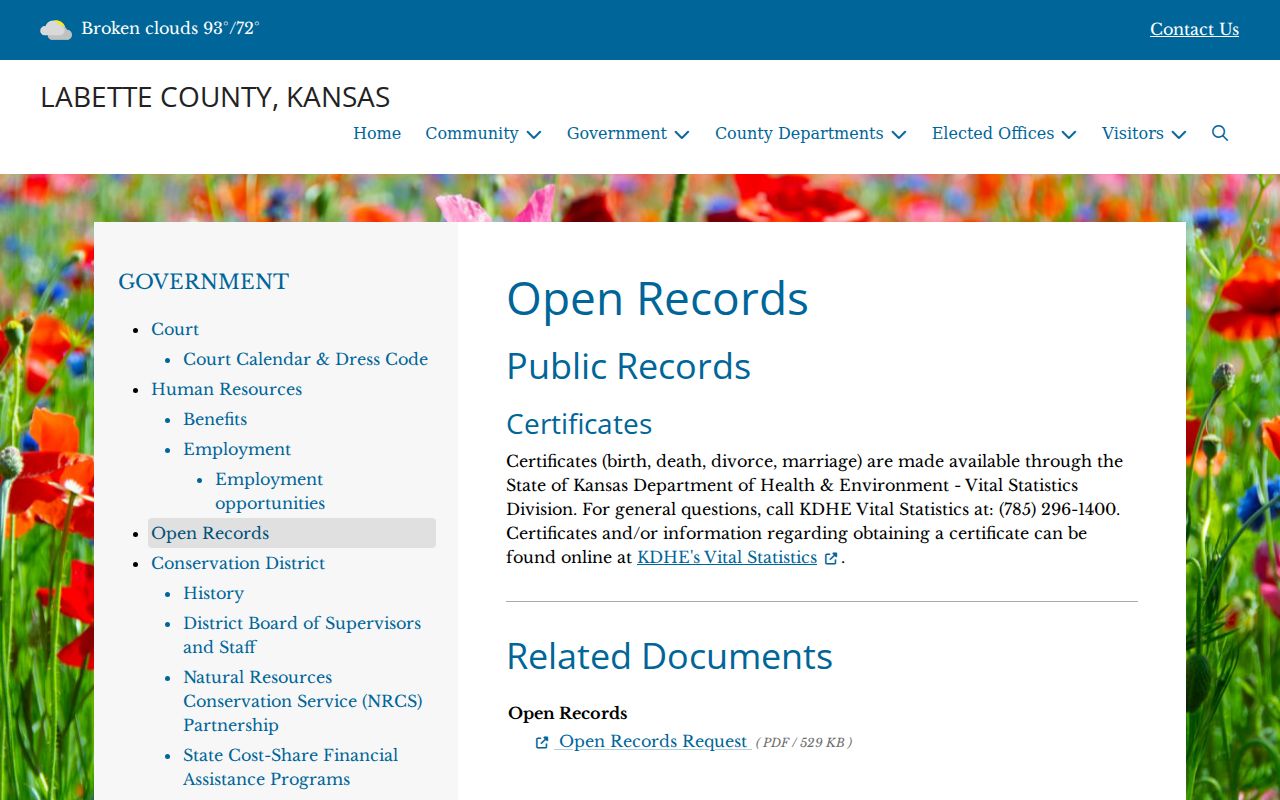
This split matters in practice. The county packet carries its own fee statement and payment instruction, and those terms should not be applied to a district court request.
Inside a Labette Court Record
A full Labette County case file can hold more than the public docket shows. What is available depends on record age, eCourt coverage, Rule 22, Rule 24, and any sealing or redaction order.
| Case number | The unique identifier, such as a Parsons or Oswego branch format. |
|---|---|
| Pleadings | Petitions, complaints, answers, motions, responses, and notices. |
| Events index | The dated list of filings, settings, orders, and disposition events. |
| Orders and judgments | Signed court directions and rulings that establish what the court decided. |
| Exhibits | Filed evidence or attachments, subject to access limits and imaging. |
| Access state | Online image, terminal-only, redacted, sealed, restricted, or unavailable. |
A motion's filing is not a ruling. Closed status says nothing about the result. When the outcome matters, read the signed order or judgment itself.
Missing Labette Document Images
A public event can show up without an image. The document may predate the eCourt transition, may never have been imaged, may be restricted, or may be temporarily unavailable. Write down the exact event title and date. Then check the courthouse terminal and ask the clerk whether inspection or a copy can be provided.
- Capture the public case number and branch.
- Name the exact event or document and its date.
- Ask whether the item is public but terminal-only, archived, or not imaged.
- Request a redacted public copy if protected fields are the only barrier.
- Ask for a fee estimate and delivery options before ordering.
For an older file, give the approximate filing year. Ask whether the record is electronic, on microfilm, in a bound volume, or archived. Labette County publishes no current retention schedule or guaranteed archive turnaround, so plan for some uncertainty.
Fees and Certified Copies
Eleventh Judicial District Local Rule 13 sets out district-court reproduction and staff-time charges. Certification authenticates a record that already exists; it creates no new summary and no legal opinion.
| District court item | Rule 13 amount |
|---|---|
| Copy | 25 cents per page |
| Certification | $1 per certification |
| Concentrated employee time | $12 per hour |
| Estimate or advance payment | May be required based on the request |
Confirm the total, accepted payment, any delivery charge, and whether the item can be certified. The clerk does not publish transcript rates. A transcript request goes to the court reporter or an authorized transcription source, and the clerk can help identify the right contact.
Clerk of the District Court
Parsons branch: 201 S Central Ave
Parsons, KS 67357
(620) 421-4120
Labette Requests Need Exact Details
A strong written request states the requester's contact information. It also names the county and branch. Beyond that, list the case number and type, the exact document or event, the date, the desired product, and preferred delivery. It should also address the certification on prohibited commercial use that Kansas law requires. Ask for an estimate before any reproduction begins.
K.S.A. 45-218 sets a deadline. Action must come as soon as possible and no later than the end of the third business day. A delay notice must explain the cause. It must also give the earliest availability. That deadline governs the response. It does not force production of a complex archive request within three days.
A request for a future record or a new compilation is not a request for an existing record. Rule 22 likewise provides no bulk compiled-data service through public electronic access.
Sealed Records and Public Access
Public access follows the Kansas Open Records Act, Kansas Supreme Court rules, local Rule 13, statutes, and court orders. Some files stay closed to the general public route. That includes adoption files, many juvenile and child-in-need-of-care records, expunged criminal records, grand-jury material, and certain investigation records.
Key access rules:
Kansas Supreme Court Rule 22 provides internet and courthouse-terminal levels for public electronic case records.
Kansas Supreme Court Rule 24 places protected-identifier redaction duties on filers.
K.S.A. 60-2617 supplies the sealing and redaction process based on a written good-cause finding.
A courthouse terminal cannot bypass a nonpublic restriction. Ask the clerk about the record's legal access status, and whether a redacted copy or an authorized-party route is available.
Federal Records Beyond Labette Court
A federal docket lives with the U.S. District Court or Bankruptcy Court, not the Labette district clerk. For public access, PACER is the official system. It lists a per-page fee, a document cap for many reports, and a quarterly waiver threshold. Check those figures before you use it.
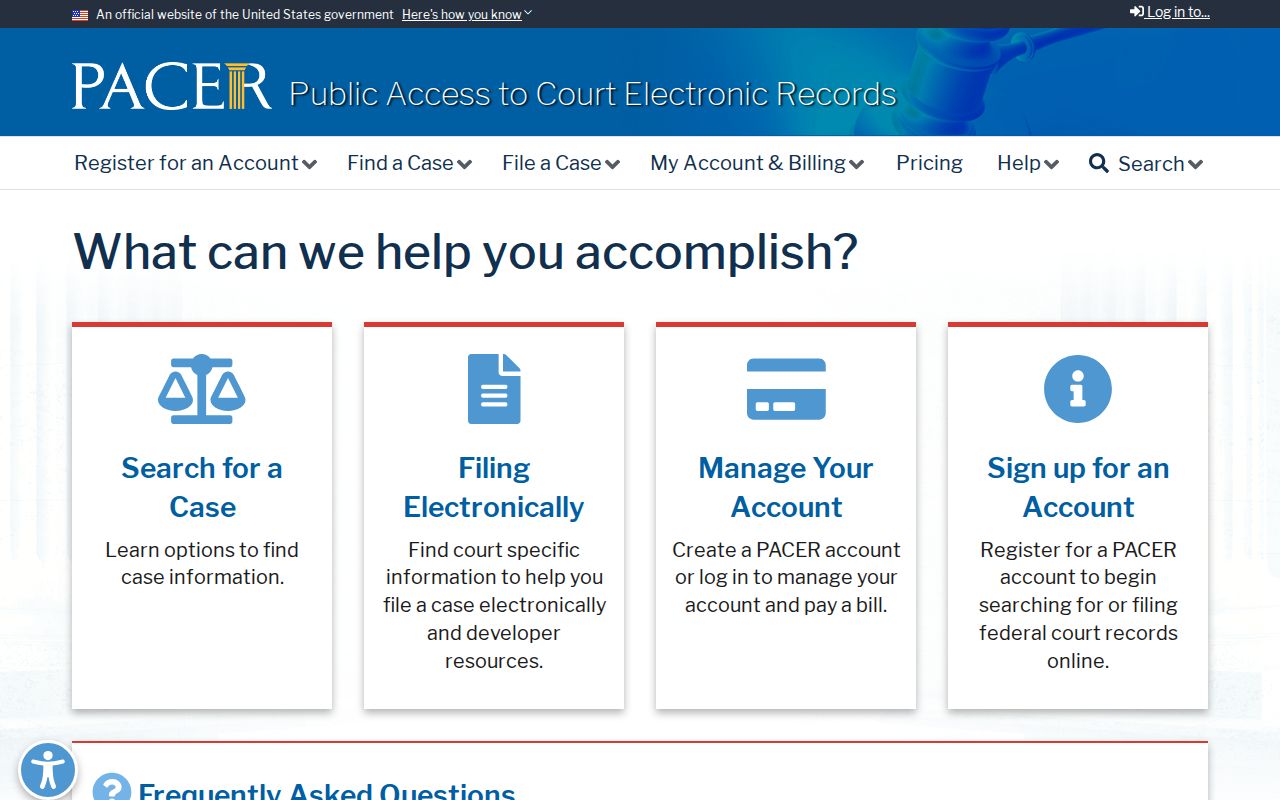
Federal cases sit outside the Labette County court docket system. They carry their own case numbers, fees, and filing terms, so turn to the District of Kansas for federal clerk and courthouse help.