
Searching Labette County Criminal Dockets
For the main route, use Kansas District Courts CaseSearch. Accept the terms. Pick Labette County District Court from the live control. Run your search by exact case number or the name format the portal wants. Older Smart Search instructions may not match the current labels. A result shows public case information and an events index, not the certified court record.
Sort out the venue first. State felonies, misdemeanors, and state traffic cases sit in the district system. A city ordinance or city traffic charge stays with the issuing municipal court. The county offers no search that covers every municipal docket at once.
- Accept the terms and choose the available search type.
- Enter the exact case number or a name, then narrow the results.
- Complete the human check and submit.
- Confirm the branch, charge, status, settings, and events.
- Use the clerk or courthouse terminal if a document is missing.
Labette Criminal Case Number Codes
Modern captions combine a branch, year, case type, and sequence. A Parsons criminal case might read LBP-2025-CR-000256. LBP points to Parsons. CR marks a criminal case when the portal or clerk confirms the code. Treat these as format samples, not private records.
Older Labette County cases use compact styles like 2019CV25 or RL2019CV25. One failed exact search proves little. Reset the form and try the number printed on the court paper. A name, a different branch, or a wider date range can work too. Do not conclude no docket exists too soon.
| Field | Use | Limit |
|---|---|---|
| Record number | Keep its punctuation and prefix | Old and modern formats coexist |
| Name | Follow the live name order | Common names need filters |
| Court and type | Narrow to Labette and criminal | Live options control |
| Dates | Set a filing range | Optional filter |
Inside a Labette Criminal Docket
A criminal docket opens with the branch, case number, filing date, type, judge, and status. Party roles and attorneys come next. The charge block may list each count, its statute, the offense text, and the class. Then the events index runs through the life of the case: complaint, warrant or citation, service, counsel, bond, arraignment, motions, discovery, settings, plea, trial, judgment, and appeal.
Read every layer for what it is. Bond set is not a finding of guilt. A filed motion is a request, not a ruling. A closed status does not reveal how each charge ended, and the signed journal entry or judgment gives the firmer answer.
| Case number | Branch, year, criminal type, and sequence when the modern format applies. |
|---|---|
| Charge block | Count, cited law, charge text, and classification, subject to amendment. |
| Settings | Hearing type, date, time, location, judge, and reset state. |
| Events index | Dated filings, court acts, orders, and available links. |
| Disposition | Plea, trial result, dismissal, diversion, sentence, or other final action. |
Note: Rely on the newest event and the signed order, not on an old setting, charge label, or warrant entry.
Labette Bond, Warrant, and Disposition
Three pieces of a Labette County criminal court docket get mixed up constantly. Bond is the release or financial layer. A warrant or failure-to-appear entry is a court event that calls for current confirmation. Disposition is the result of the charge or case. None of the three can safely stand in for another.
- Bond
- A release condition or financial entry, not a conviction.
- Warrant or FTA
- An event tied to a warrant or failure to appear; ask whether it is current.
- Disposition
- The outcome, such as dismissal, plea, diversion, or trial result.
- Journal entry
- The record that memorializes a hearing, ruling, sentence, or judgment.
A diversion or deferred path needs its later completion or disposition order to mean anything. A program event alone never shows whether the court dismissed the charge or adjudicated it.
How a Criminal Case Moves
A Labette County criminal docket builds up over time. The clerk accepts a charging paper and logs every later filing or court act. The path rarely runs straight. Charges can change, hearings reset, and cases end before trial. Follow the events by date, and pair each motion with the order that resolves it.
Docket flow: Charge Filed › Arraignment › Pretrial › Plea or Trial › Disposition › Sentencing
Arraignment addresses the charge, rights, and plea process. Pretrial entries may cover discovery, counsel, motions, or continuances. After a plea or trial, a journal entry should record the result, and sentencing, probation, restitution, costs, and satisfaction events can keep coming after disposition.
Labette Criminal Docket Branches
Labette County keeps one district-court docket across two locations. The Parsons Judicial Center serves as the full-service criminal branch. The Oswego Courthouse runs a smaller, roughly monthly calendar for traffic, fish and game, and limited criminal matters. Confirm your branch and setting before you drive.
Municipal courts form a separate layer entirely. Each city clerk keeps that city's traffic and ordinance cases. A municipal payment screen is not the Labette County District Court events index.
| Channel | Matters | Starting point |
|---|---|---|
| Parsons district branch | Full-service state criminal docket | CaseSearch, terminal, clerk |
| Oswego district branch | Limited scheduled state matters | Confirm branch and date |
| Municipal court | City ordinance and traffic | Issuing city's clerk |
Labette Citation Search Is Narrower
The Kansas Courts Central Payment Center search finds covered citation or payment records through several identifiers. It is not the authoritative criminal docket, and it replaces neither CaseSearch nor the district clerk. The official payment search page presents lookup groups aimed at payments rather than a full events view for a Labette County criminal docket.
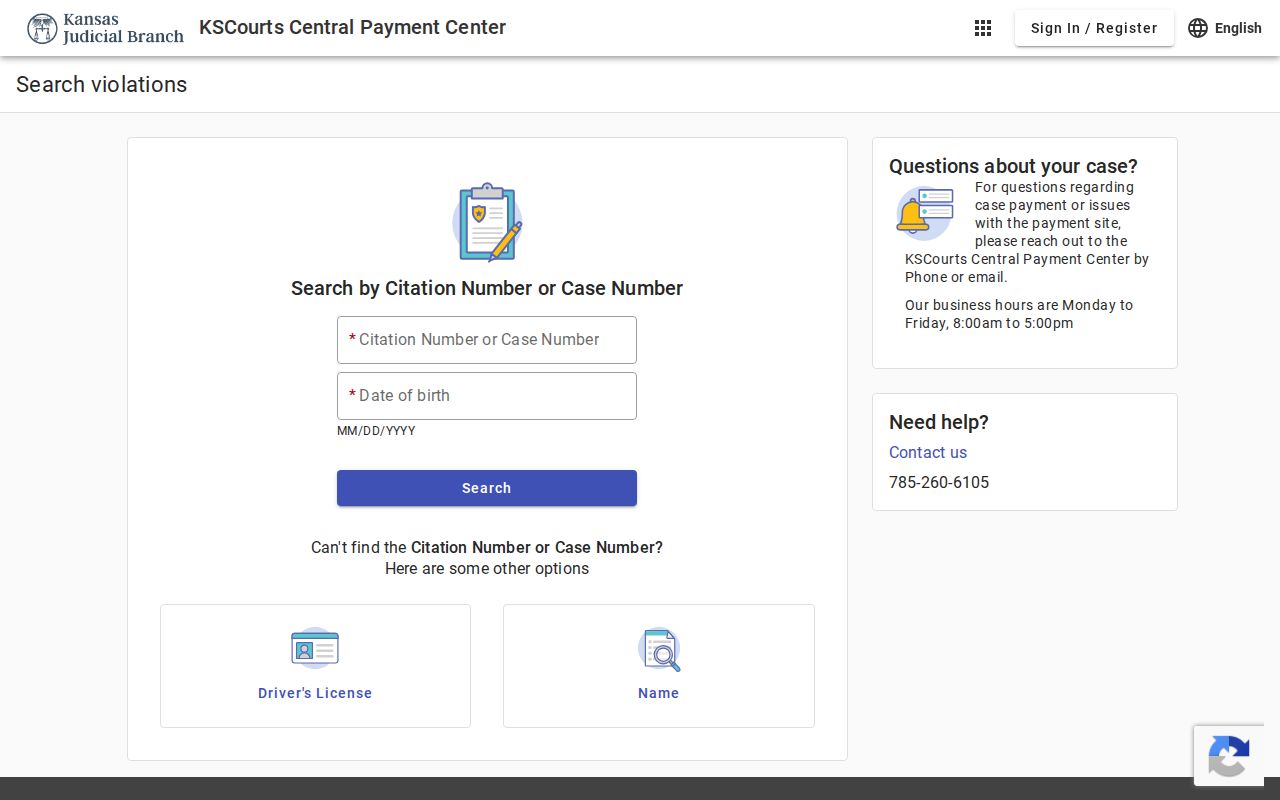
Use that screen only when the citation or the court points you there to pay. For charges, motions, hearings, and outcomes, go back to the docket the court itself holds.
Sealed Dockets and Public Access
Kansas Supreme Court Rule 22 sets out internet portal and courthouse-terminal access. Some public records sit at the terminal but not online. Neither channel gets past a nonpublic restriction. Adoption, many juvenile matters, expunged criminal records, grand-jury material, and certain investigation files may not appear at all.
K.S.A. 60-2617 governs sealing and redaction after a good-cause finding, while K.S.A. 21-6614 covers expungement. If a result is restricted, do not fill the gap with guesses.
Access does not mean every image is online. Check a public terminal, ask the clerk about status, or request a redacted or certified copy.
Labette Criminal Record Access Channels
Each access route serves its own purpose. CaseSearch comes first as the public index. Then come the courthouse terminals, one per courthouse. The clerk counter can still pull an older public file by hand. When a written Kansas court KORA request is the route, it should name the branch, the case number, the exact document and date, the copy type, and how you want it delivered. Ask for a fee estimate too, because Labette does not publish current fees or turnaround times.
- Use CaseSearch for public district case information.
- Use the Parsons or Oswego terminal for missing online material.
- Ask the Clerk of the District Court at the counter or by phone.
- Send a focused request for an older, plain, or certified copy.
- Ask the court reporter about transcripts.
- Contact the municipal clerk for a city charge.
Need real proof? Request the signed judgment or journal entry. For deeper detail on name and number controls, the Labette County case lookup is the place to go.
Federal Cases Outside Labette Dockets
Federal criminal cases never land in the Labette County District Court docket. They belong to the U.S. District Court for the District of Kansas. That court runs its own federal docket systems. Check that first. It saves you a pointless county search when the paperwork names a United States case. The District of Kansas entry point and its docket resources sit apart from anything Labette offers.
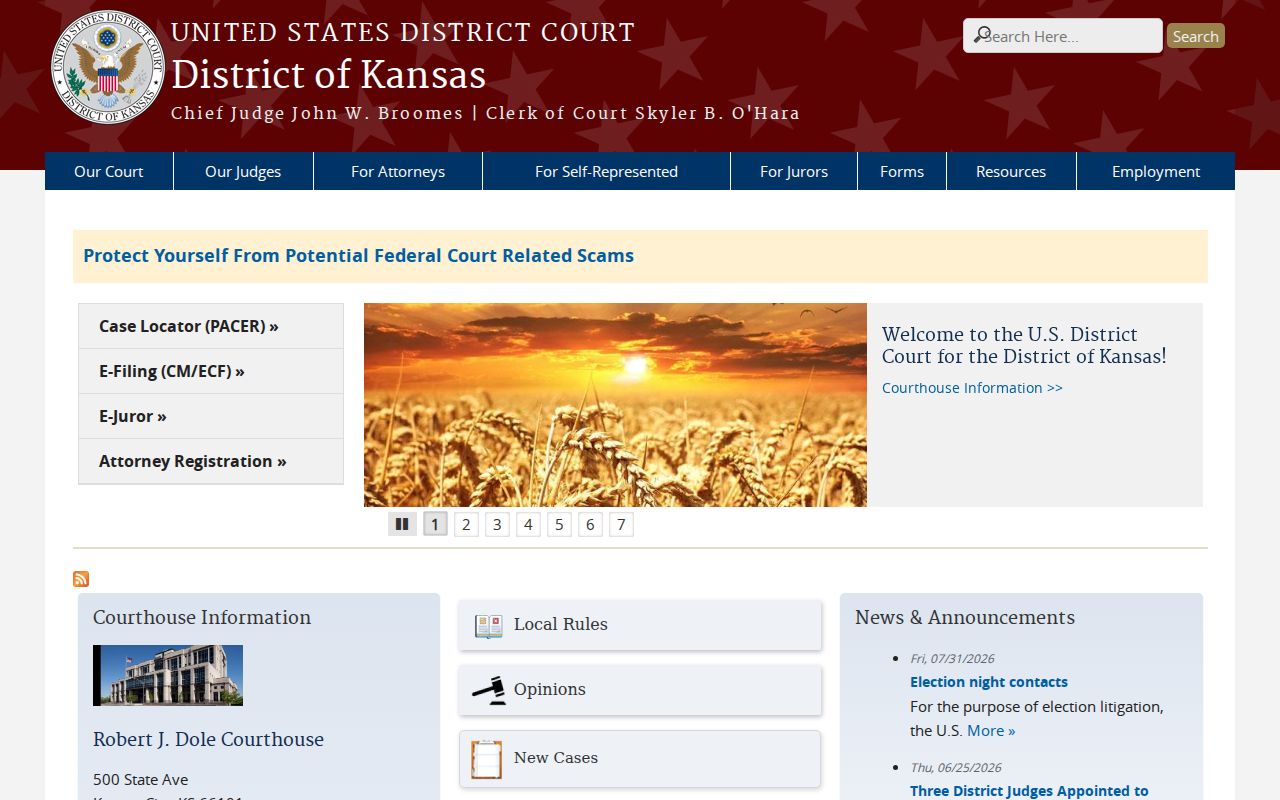
Keep the custodians straight. The Labette clerk holds state district files, city clerks hold municipal files, and the federal clerk keeps the District of Kansas cases.